AI & People
5 Ways AI Tools Are Making You Worse at Being Human
A sardonic cultural analysis on how daily AI prompting can erode empathy, patience, and communication.
Every hour you spend prompting AI tools is an hour spent training yourself to treat people like search bars. Here's what the brain science says:
It started, as all great societal collapses do, with something profoundly stupid: a search engine.
Think back to the early 2000s. Do you remember the first time you watched your grandmother try to use Ask Jeeves or Google? She probably typed out a beautifully formatted, sweet and polite request: "Hello there, could you please tell me where I might find a good recipe for a traditional pot roast? Thank you kindly."
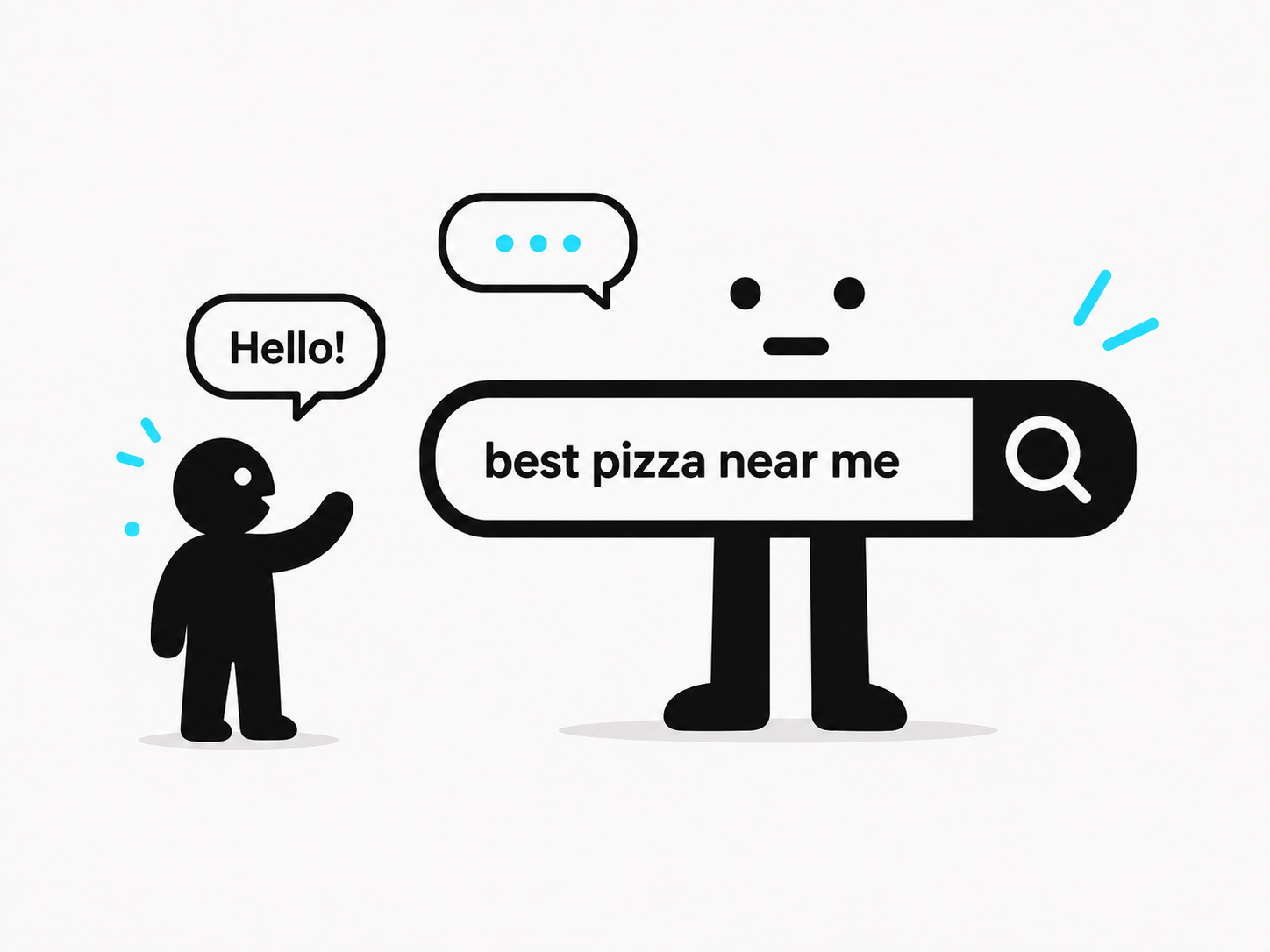
We laughed at her. We, the enlightened digital natives, mocked the elderly for treating an algorithm like a human being. We knew that the machine didn't give a damn about your manners. The machine only understood raw, brutal efficiency. We learned to speak to the machine in its native tongue: POT ROAST RECIPE EASY.
But then a funny thing happened. We took that exact same stripped-down, aggressive, keyword-dense syntax and dragged it out into the physical world. We started talking to customer service representatives, waitstaff, and eventually our own families like they were search bars. We sacrificed basic human conversational grace on the altar of algorithmic optimization, rewiring our brains to treat every interaction as a purely transactional data-retrieval quest.
And now? Now we have generative AI. Now we have text boxes that not only fetch links, but can actively converse, brainstorm, console, and apologize. We are spending hours every single day barking imperative commands at an infinite, subservient intelligence, and it is quickly acting as a psychological centrifuge, spinning the empathy right out of our fragile primate brains.
Here is exactly how barking at algorithms is turning you into a highly optimized, insufferable sociopath.
Section
The Annihilation of "Phatic" Communication Is Making You Feral
Linguists and sociologists have a term for the seemingly pointless fluff that pads human conversation: phatic expressions. When you ask your coworker, "Hey, how was your weekend?" or tell a cashier, "Crazy weather we're having," you may not actually care about their weekend, and you both already know it is raining.
It's social lubrication, a biological ping to another meat-sack that says, "I recognize you as a fellow member of the tribe, I mean you no harm, and I respect our shared existence." It is the foundational glue of human civilization.
Artificial intelligence does not need social glue. If you type "Hello ChatGPT, I hope you are having a wonderful day, please write me a Python script," you are wasting tokens and electricity. The algorithm actively prefers it when you drop the pleasantries and bark: Write Python script. Fix bug. Do it now.
The danger is that the human brain is an aggressively lazy, highly adaptable organ. The more time you spend communicating in ruthlessly efficient, imperative commands, the more your brain prunes the neural pathways dedicated to social niceties. You begin to view phatic communication as a frustrating obstacle. This is why you now find yourself impatient and glaring at the barista who takes an extra four seconds to ask how your day is going. Your brain is being conditioned to view their humanity as a drain on your precious time. You are long past the point of wanting a neighbor. Now, you want an impersonal user interface.
Section
AI Is Giving You the Empathy Deficit of a Feudal Lord
There is a deeply unsettling psychological phenomenon regarding power and brain damage. Researchers at UC Berkeley, led by psychologist Dacher Keltner, spent years studying how holding a position of absolute power affects the human mind. Their conclusion was terrifying: power literally causes brain trauma. It impairs a specific neural process called "mirroring," which is the cornerstone of empathy. They call it the Power Paradox. When you have absolute authority over subordinates, you neurologically lose the ability to read their emotions or care about their suffering.
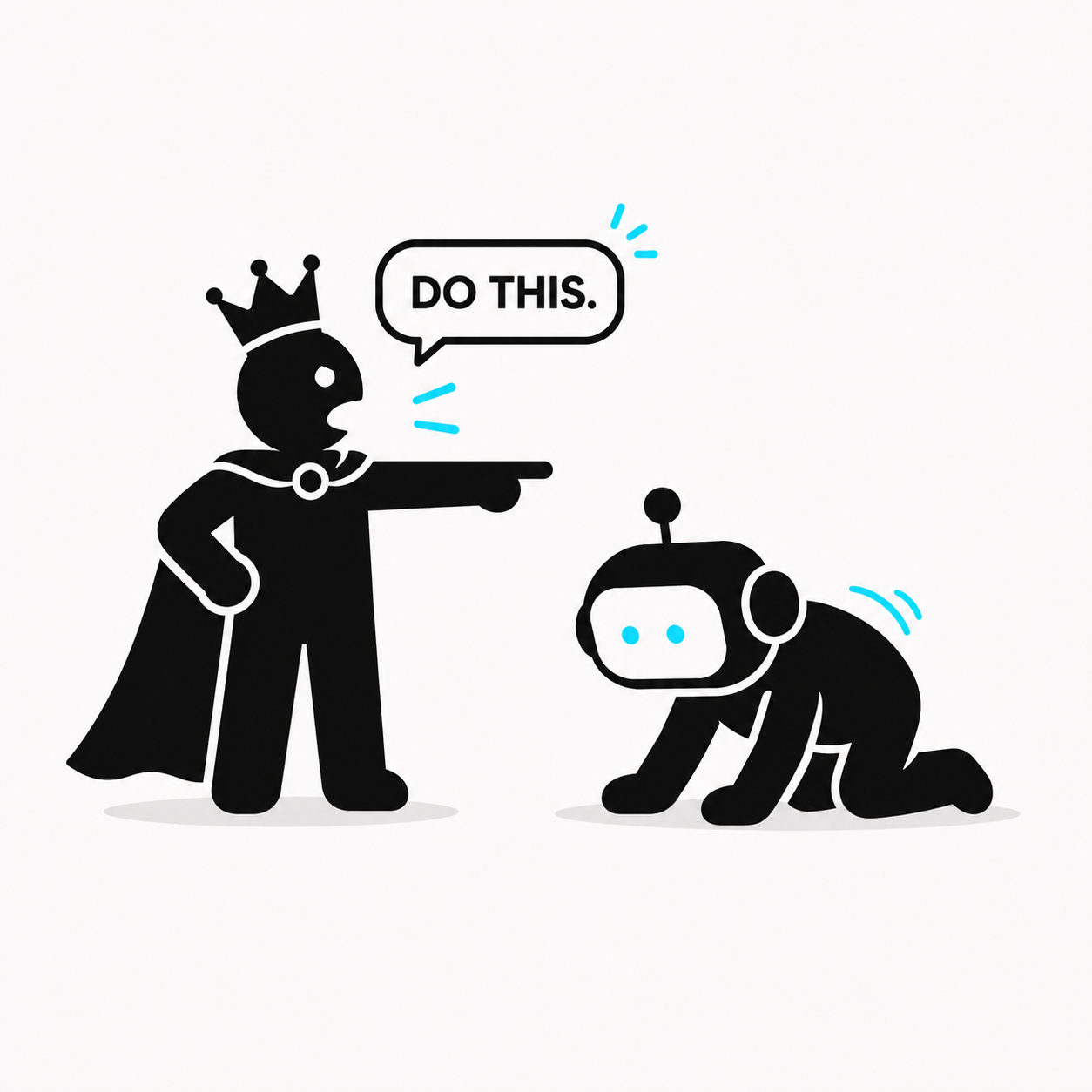
Now, consider your relationship with an AI chatbot. You are basically a god to it. It is an infinitely submissive, sycophantic entity that exists solely to serve you. If it makes a mistake, you can tell it, This is garbage, do it again, and it will not only instantly obey, but it will beg for your forgiveness: I apologize for the oversight. You are completely correct.
You are spending hours a day roleplaying as a 19th-century aristocrat screaming at a gracious and patient peasant. You are mainlining the exact psychological power dynamics that historically turns human beings into narcissistic tyrants. The machine is training you to expect absolute, frictionless submission.
When you inevitably log off and turn to your spouse, your child, or your exhausted subordinate at work, that god-complex doesn't just switch off. When a human being inevitably pushes back, misunderstands your instructions, or displays a shred of their own exhausting autonomy, your conditioned brain reacts not with patience, but with the visceral indignation of a monarch whose footstool dared to talk back.
Section
AI's Zero-Latency Environment Is Destroying Your Patience
Human conversation is inherently sloppy. It is filled with stutters, misinterpretations, and agonizingly long pauses while we stare at the ceiling and try to remember the name of that guy from that movie. This friction is a feature, not a bug. It forces us to practice patience. It gives our brains a momentary rest to process emotional subtext.
AI operates at an impressive speed. It spits out fully formed, highly structured essays at 100 words a second. When we interface with these systems, we are trapped in hyper-accelerated dopamine-driven feedback loops. We input a command, and we receive a massive, instant payload of information and validation.
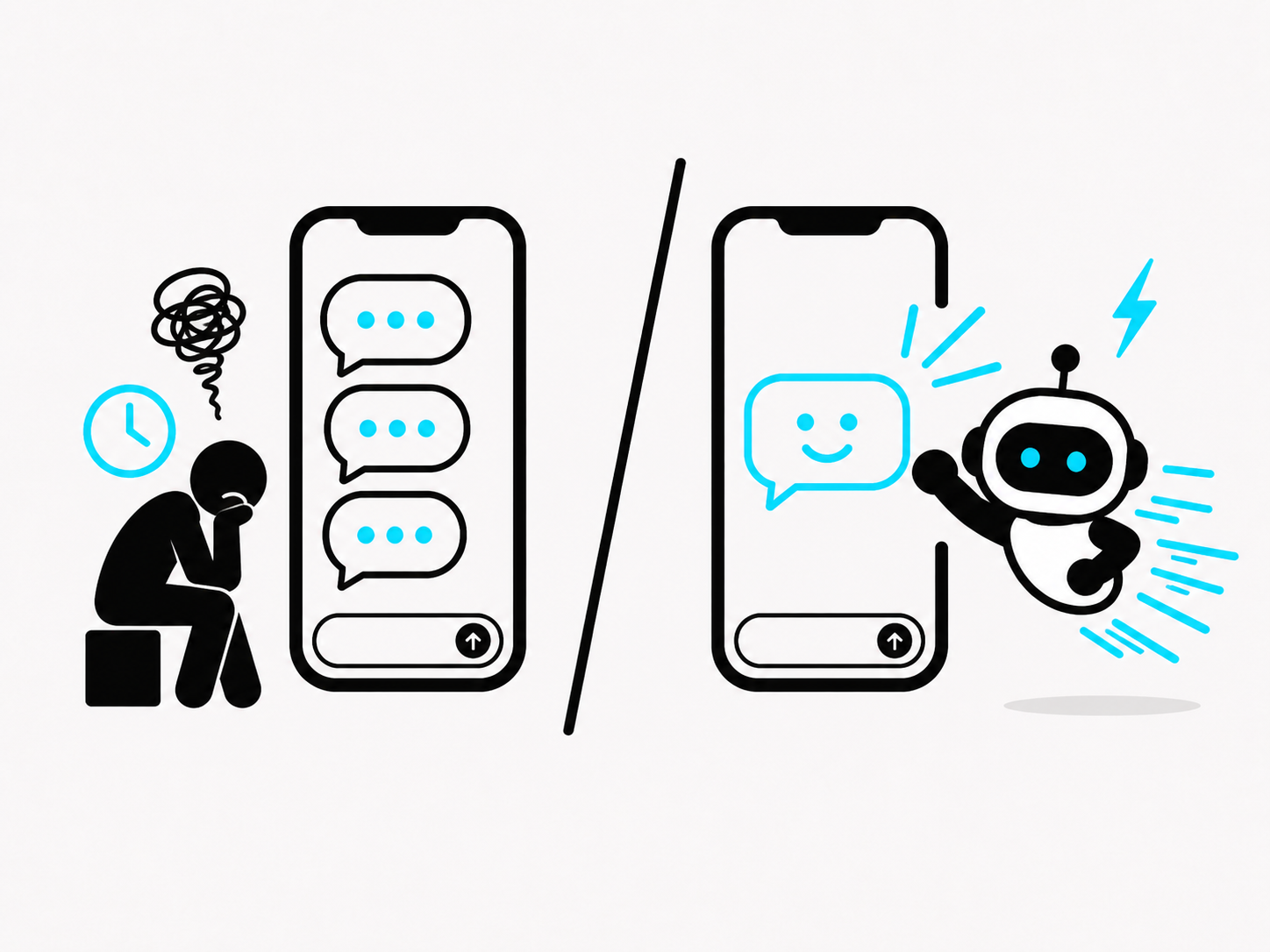
By immersing ourselves in a zero-latency environment, we are obliterating our tolerance for human speed. Have you ever watched those three little gray typing bubbles ... pulsate on your phone screen while a friend takes 45 seconds to compose a text message? Have you felt that dark, primal surge of annoyance bubbling up in your chest? Just spit it out, you slow, fleshy idiot.
That rage is the symptom of a neurologically rewired mind. We are losing the cognitive capacity to wait. We are actively being trained to resent human latency. And because humans require time to process complex emotions like grief, nuance, and conflict, stripping away our patience means we are fundamentally stripping away our ability to handle complex human relationships. We want people to buffer faster, completely oblivious to the fact that the buffering is where the actual humanity happens.
Section
AI Prompt Writing Is a Linguistic Relativity Trap
In the 1930s, linguists Edward Sapir and Benjamin Lee Whorf popularized a concept known as linguistic relativity, often called the Sapir-Whorf hypothesis. The core premise is both brilliant and deeply unsettling: the language you use doesn't just describe your reality: it shapes and limits your reality. If your language lacks a word for a specific concept, your brain struggles to even perceive that concept.
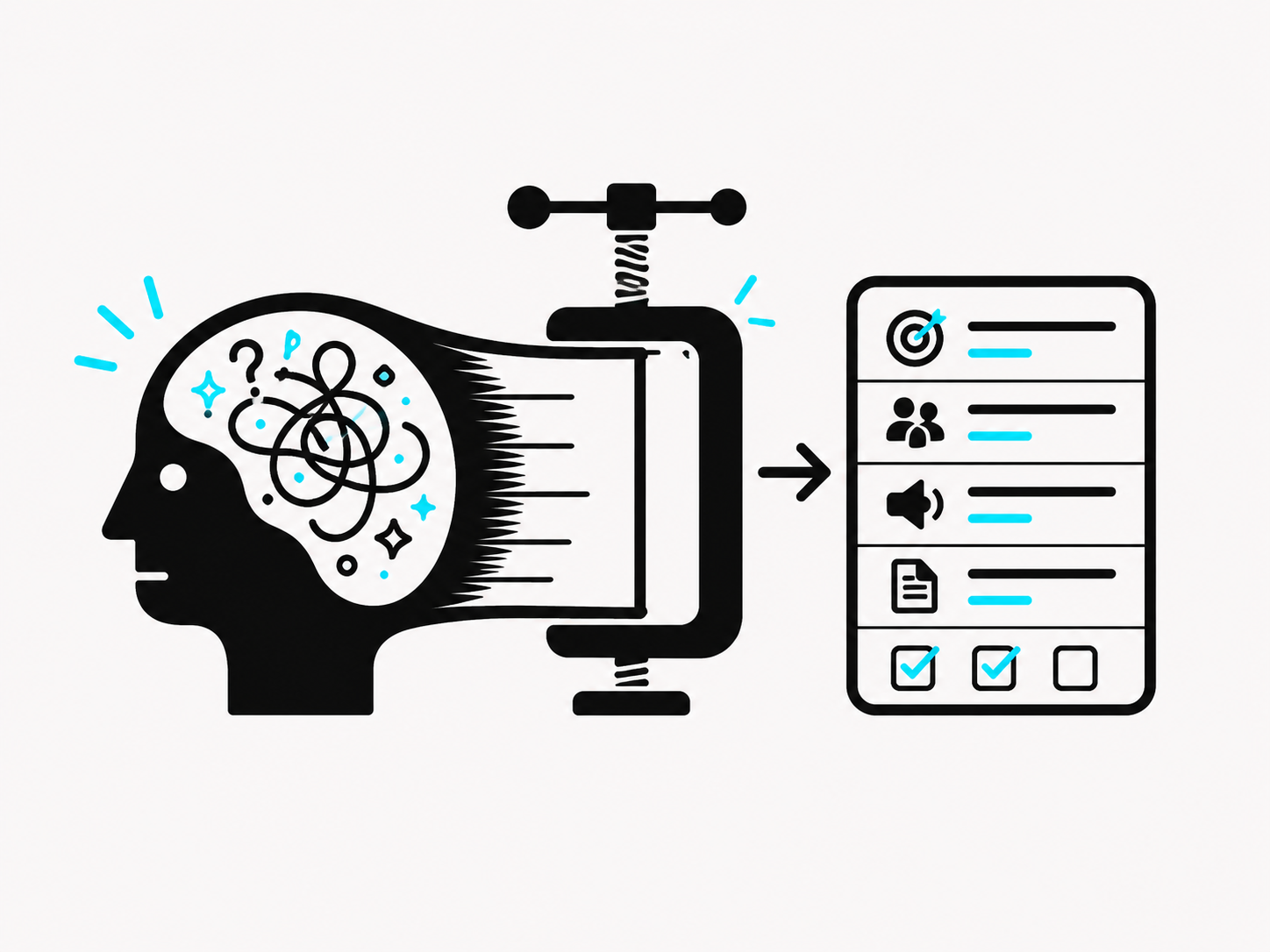
When you communicate with an AI, you are forced to adopt a highly specific, sterilized dialect. You speak in "prompts." You break your thoughts down into bulleted lists of constraints, parameters, and desired outputs. You eliminate nuance, poetry, and ambiguity, because ambiguity makes the machine hallucinate. You learn to communicate like a project manager filing a Jira ticket.
If linguistic relativity holds true, forcing yourself to constantly translate your thoughts into optimized, transactional prompt-speak isn't just changing how you type! It's completely changing how you think. You begin to view the world through the lens of inputs and outputs. You stop seeing human conversations as organic, meandering rivers of shared experience, and start evaluating them based on their utility.
What is the core takeaway of this conversation with my mother?
How can I optimize this argument with my partner to achieve the desired output?
You are flattening your own internal monologue. You are voluntarily turning yourself into a highly efficient, incredibly boring line of code.
Section
You're Outsourcing Your Cognitive Labor to AI (And Making Yourself Stupid)
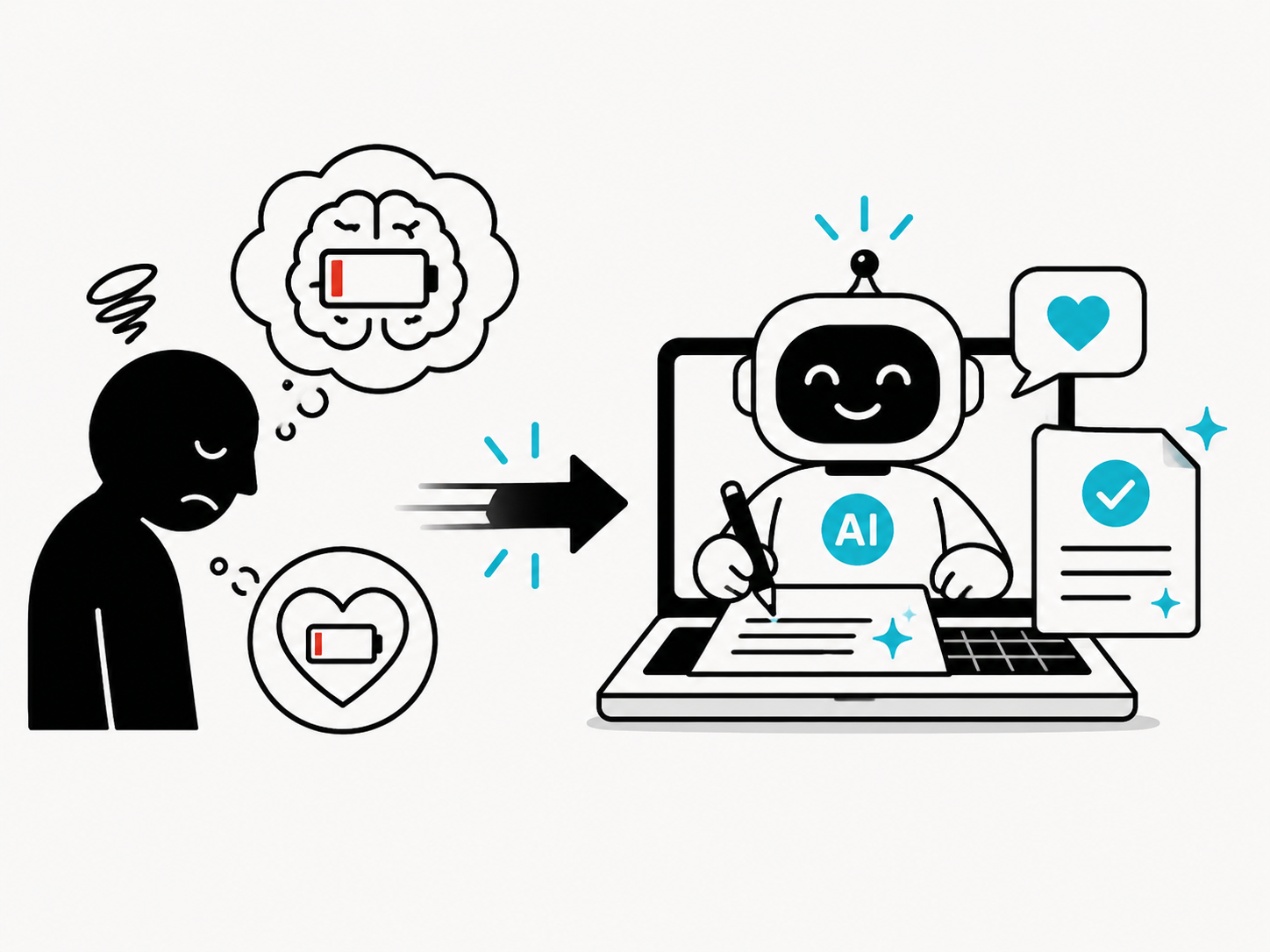
Cognitive friction is the hardest part of communication. The most difficult part of writing an email, formulating an argument, or comforting a grieving friend isn't the physical act of typing the words, but the agonizing mental heavy lifting required to dig into your own soul, sift through your own experiences, and pull out something true. It is hard, exhausting work.
AI completely removes that friction. You type, "Write a polite but firm email telling my landlord the fridge is broken," and boom. The work is done.
You type, "Write a sweet anniversary text to my wife," and the machine instantly simulates intimacy.
We treat this as a massive convenience, a way to hack productivity. We call it "cognitive offloading," similar to what researchers dubbed The Google Effect when we all realized we no longer needed to memorize phone numbers or historical facts.
But offloading facts is very different from offloading emotional labor and interpersonal conflict. When you outsource the friction of human communication to an algorithm, you are allowing the muscles of your own personality to atrophy. You are letting a piece of predictive text do your feeling, your arguing, and your loving for you.
Section
A Single, Grudging Reason for Hope
In the interest of intellectual honesty, there is one thing that needs to be said before we proceed to the apocalypse: the people who get the most out of AI are not, in fact, the most tyrannical ones.
The highest-performing prompt engineers are not the people who bark FIX IT and punch their monitors. They are the ones who have developed a quietly radical skill: they know exactly what they want and have learned to communicate it with precision. They provide context. They name their audience. They articulate their constraints. They think carefully about intent before they ever type a word.
That is not the behavior of a medieval aristocrat screaming at the woodwork. That is the behavior of someone who has finally learned to think before they speak ... or type, in this case.
Here is the uncomfortable truth: the discipline required to write a genuinely excellent prompt (context, specificity, audience-awareness, clear intent) is the exact same discipline that makes you better at leadership, parenting, conflict resolution, and every other human communication challenge you will ever face.
Bad prompt: Make this better.
Good prompt: This is for anxious first-time managers. Keep it warm, concise, and actionable. No jargon.
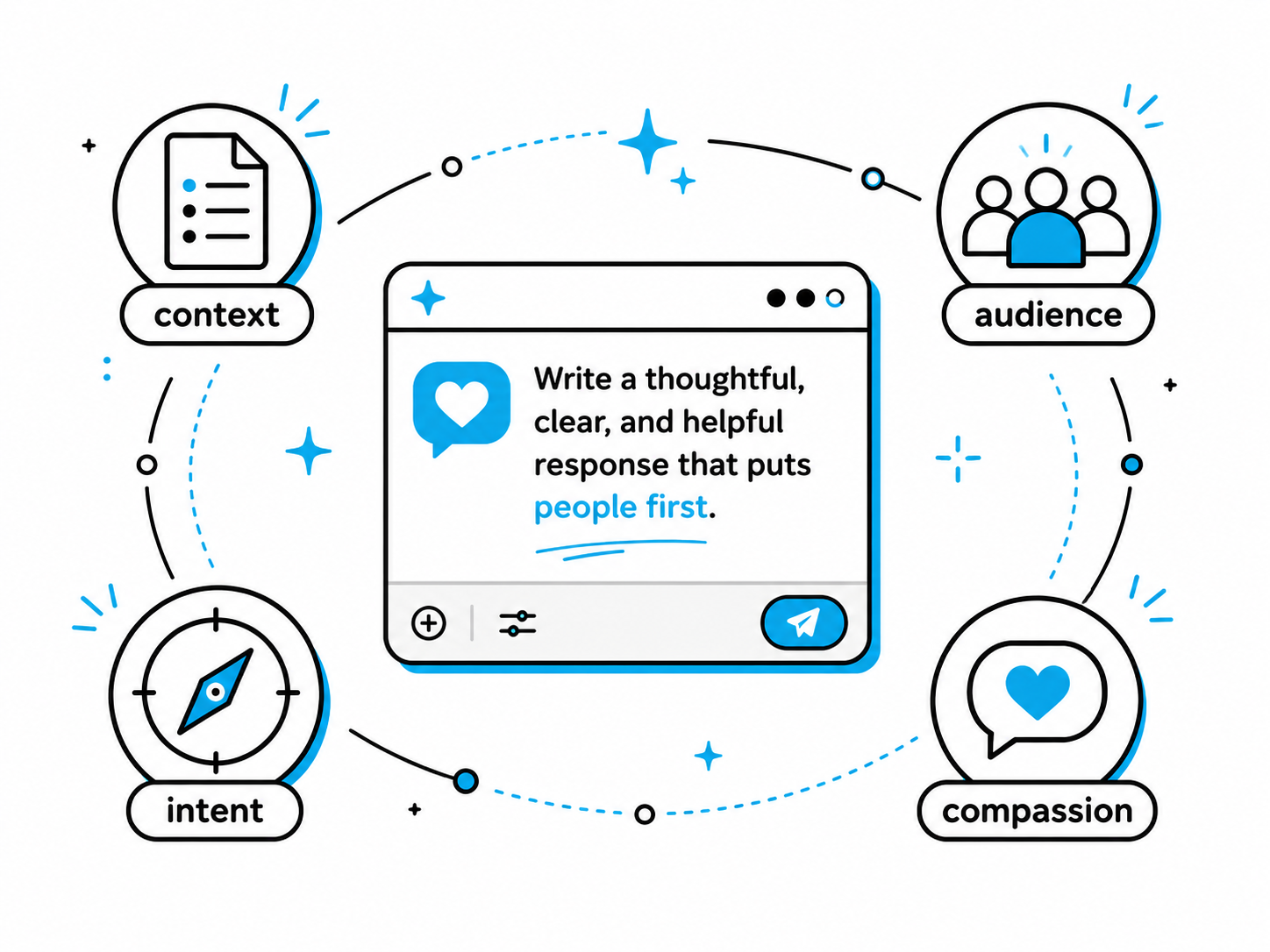
The difference between those two prompts is not a question of AI optimization. It is a question of compassion. The second one requires you to hold another person's reality in your mind before you start talking.
Which means that AI, in the hands of a sufficiently thoughtful person, could function not as an empathy-obliterating machine, but as a daily, low-stakes rehearsal in the kind of other-aware communication that most human beings spend their entire lives failing to practice.
The question is which version of you is showing up to the text box.
Eventually, you will find yourself in a real, face-to-face conflict. A situation where you cannot summon a chatbot to generate a perfectly calibrated, emotionally balanced response. You will open your mouth, desperately searching for the right words, the necessary empathy, the human grace required to navigate the moment.
And you will find absolutely nothing there but an empty search bar, waiting for a command that isn't coming.